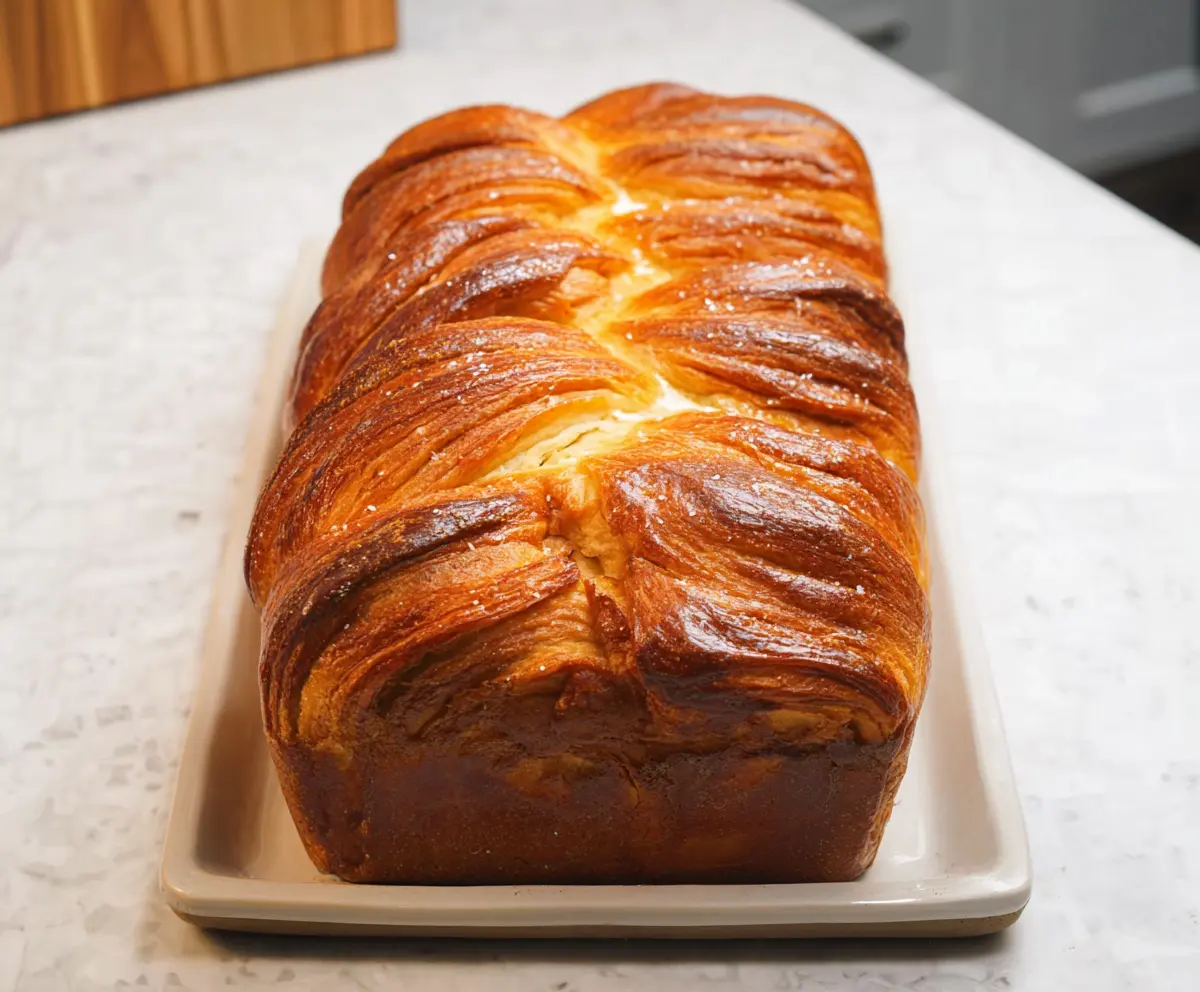
Croissant Bread Loaf is a delightful treat that brings the best of flaky croissants into a sliceable loaf form. Imagine all the buttery layers you love in a croissant, baked together into a soft, pull-apart bread that’s perfect for breakfast or an afternoon snack. It’s golden on the outside, tender and airy on the inside, with just the right amount of flakiness.
I love making Croissant Bread Loaf when I want something special but easy to share. It’s great because you can slice it up and serve it with jam, honey, or even a bit of cheese. The best part is that it looks impressive without a lot of effort, and it always disappears fast when guests come over. If you have a little extra time, warming a slice just before serving brings out all that buttery goodness.
This bread loaf reminds me of cozy mornings when there’s plenty of time to enjoy breakfast with family or friends. It’s like having a bakery treat right at home, and I always feel proud when I slice into that soft, layered loaf. Whether for a special occasion or a quiet weekend at home, Croissant Bread Loaf is a sure way to make any morning feel a little brighter.
Key Ingredients & Substitutions
All-purpose flour: This gives structure to the loaf. I like using bread flour if you want a chewier texture since it has more protein, but all-purpose works well. If gluten-free is needed, try a gluten-free blend with xanthan gum.
Butter (for laminating): Cold, high-quality unsalted butter is key for those flaky croissant layers. European-style butter with higher fat content gives better richness and flakiness. If you can’t get unsalted, reduce added salt a bit.
Instant yeast: It helps the dough rise faster and more reliably than active dry yeast. If you only have active dry, dissolve it in warm milk first and allow it to proof for 5-10 minutes.
Milk: Warm milk enriches the dough, making it softer. You can substitute with any milk you like—whole, 2%, or a non-dairy alternative like almond or oat milk for dairy-free options.
Eggs: They add richness and help with the dough’s elasticity. The egg wash on top gives a shiny, golden crust. If you want a vegan option, an aquafaba (chickpea water) wash also works to get a shiny finish.
How Do You Master the Laminating Process for Flaky Layers?
Laminating means folding cold butter into dough in layers to create croissant-like flakiness. It can be tricky but take it slow and keep everything cold.
- Roll dough into a square and add a flattened, cold butter block on one side. Fold the dough to cover the butter completely like an envelope.
- Roll gently and evenly to a long rectangle—don’t press too hard or the butter will break through.
- Fold the dough into thirds (like folding a letter) to build layers of butter inside.
- Chill the dough between folds; this keeps the butter firm and helps layers set.
- Repeat rolling and folding 3 times total to get enough layers for that flakey texture.
- Always keep your work surface lightly floured to prevent sticking, but don’t use too much or the dough will dry out.
- If the butter softens or melts, chill the dough longer before continuing.
Patience and temperature control during laminating are your best friends for a perfect buttery, flaky Croissant Bread Loaf.
Equipment You’ll Need
- Stand mixer with dough hook – makes kneading easier and faster, especially for sticky dough.
- Rolling pin – helps roll out the dough evenly for perfect layering.
- Sharp knife or pizza cutter – great for cutting clean strips without squashing layers.
- 9×5 inch loaf pan – holds the layered dough so it rises tall and bakes evenly.
- Parchment paper – keeps the butter block neat and prevents sticking during rolling.
- Pastry brush – handy for applying the egg wash evenly for a glossy finish.
Flavor Variations & Add-Ins
- Add cinnamon and sugar between layers for a sweet, spiced pull-apart bread perfect for breakfast treats.
- Mix in finely chopped herbs like rosemary or thyme with butter for a fragrant savory loaf.
- Incorporate shredded cheese such as Gruyère or cheddar between layers for a cheesy twist.
- Try spreading a thin layer of fruit jam or Nutella before folding for a sweet surprise inside.
How to Make Croissant Bread Loaf
Ingredients You’ll Need:
- 4 cups all-purpose flour, plus extra for dusting
- 1/3 cup granulated sugar
- 2 teaspoons salt
- 1 tablespoon instant yeast
- 1 1/4 cups warm milk (about 110°F / 43°C)
- 3 tablespoons unsalted butter, softened
- 1 large egg
- 1 1/4 cups unsalted butter, cold (for laminating)
- 1 egg (for egg wash)
- Coarse sea salt (optional, for sprinkling)
How Much Time Will You Need?
This recipe takes about 15 minutes to prepare the dough, plus 3 to 4 hours total for rising and chilling during lamination. Baking time is 35-40 minutes. Plan ahead because the folding and chilling steps need patience but result in deliciously flaky layers.
Step-by-Step Instructions:
1. Make the Dough:
In a large bowl or stand mixer, mix flour, sugar, salt, and instant yeast. In another bowl, whisk warm milk, softened butter, and 1 egg. Slowly add the wet mix into the dry ingredients, stirring until the dough comes together.
2. Knead the Dough:
Knead on a lightly floured surface or use a dough hook for 5 to 7 minutes until the dough looks smooth and stretches well without tearing.
3. First Rise:
Put the dough in a greased bowl, cover with a towel or plastic wrap, and let it rise at room temperature for about 1 to 1.5 hours until it doubles in size.
4. Prepare Butter Block:
While dough rises, place cold butter between parchment paper and shape it into a 7×7 inch flat square. Chill it so the butter is firm but bendable.
5. Laminating:
Roll out your dough on a floured surface to a 10×10 inch square. Place the cold butter square on one edge, then fold the dough over it like an envelope to cover the butter fully. Gently roll the dough into a rectangle approximately 8×24 inches.
6. First Fold and Chill:
Fold the dough into thirds like a letter, wrap it tightly in plastic, and chill for 30 minutes.
7. Second Fold and Chill:
Roll out chilled dough again to 8×24 inches, fold into thirds, then chill for another 30 minutes.
8. Third Fold and Chill:
Repeat rolling and folding one last time, then chill the dough for 30 more minutes.
9. Shape the Loaf:
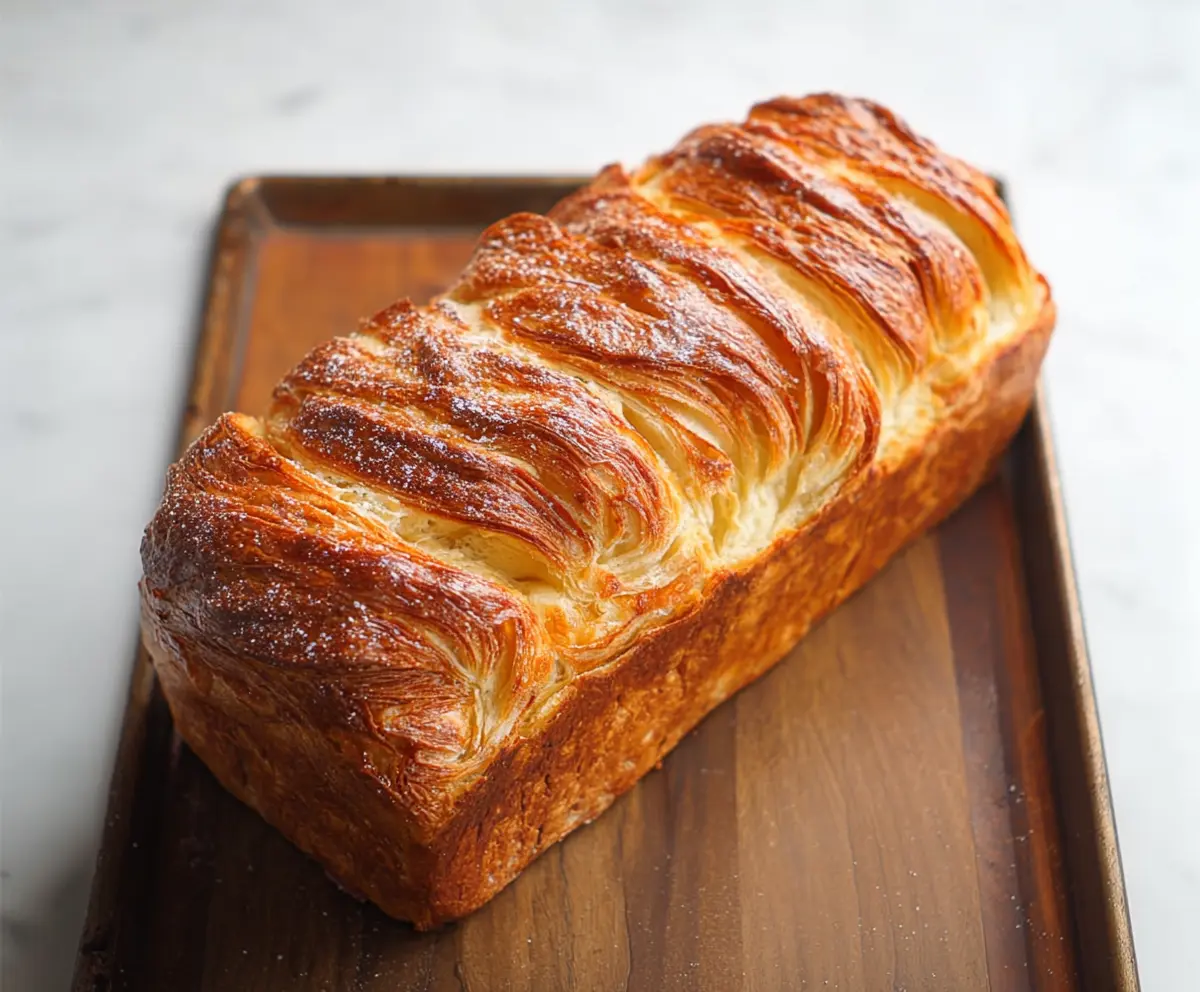
Roll the laminated dough into a 10×20 inch rectangle. Cut it into 5 or 6 strips about 3 inches wide. Fold each strip lengthwise, then stack the folded strips into a greased 9×5 inch loaf pan to create layers.
10. Final Rise:
Cover the loaf loosely and let it rise for 45 to 60 minutes until puffy.
11. Bake Your Loaf:
Preheat the oven to 350°F (175°C). Beat the remaining egg and brush it over the loaf for a golden, shiny crust. You can sprinkle coarse sea salt on top if you like. Bake for 35-40 minutes until golden brown. If the crust browns too quickly, cover it loosely with foil.
12. Cool and Serve:
Let the loaf cool a bit in the pan before moving it to a wire rack. Slice and enjoy warm or at room temperature, alone or with butter and jam.
Can I Use Frozen Butter for Laminating?
It’s best to use cold, but not frozen, butter for laminating. If your butter is frozen, let it thaw in the fridge until firm yet pliable before using. This helps create those flaky layers without butter breaking through the dough.
Can I Make Croissant Bread Loaf Ahead of Time?
Yes! You can prepare the dough and complete the lamination steps the day before baking. After the final fold, wrap the dough tightly and refrigerate overnight. Bring it back to room temperature before shaping, rising, and baking.
How Should I Store Leftovers?
Store leftover croissant bread in an airtight container or tightly wrapped in foil at room temperature for up to 2 days. To refresh, warm slices briefly in the oven or toaster for that fresh-baked texture.
Can I Add Flavors or Fillings to This Loaf?
Absolutely! Try adding cinnamon sugar, herbs, cheese, or even jam between layers during laminating for a fun twist. Just spread a thin layer before folding to keep the loaf’s structure intact.