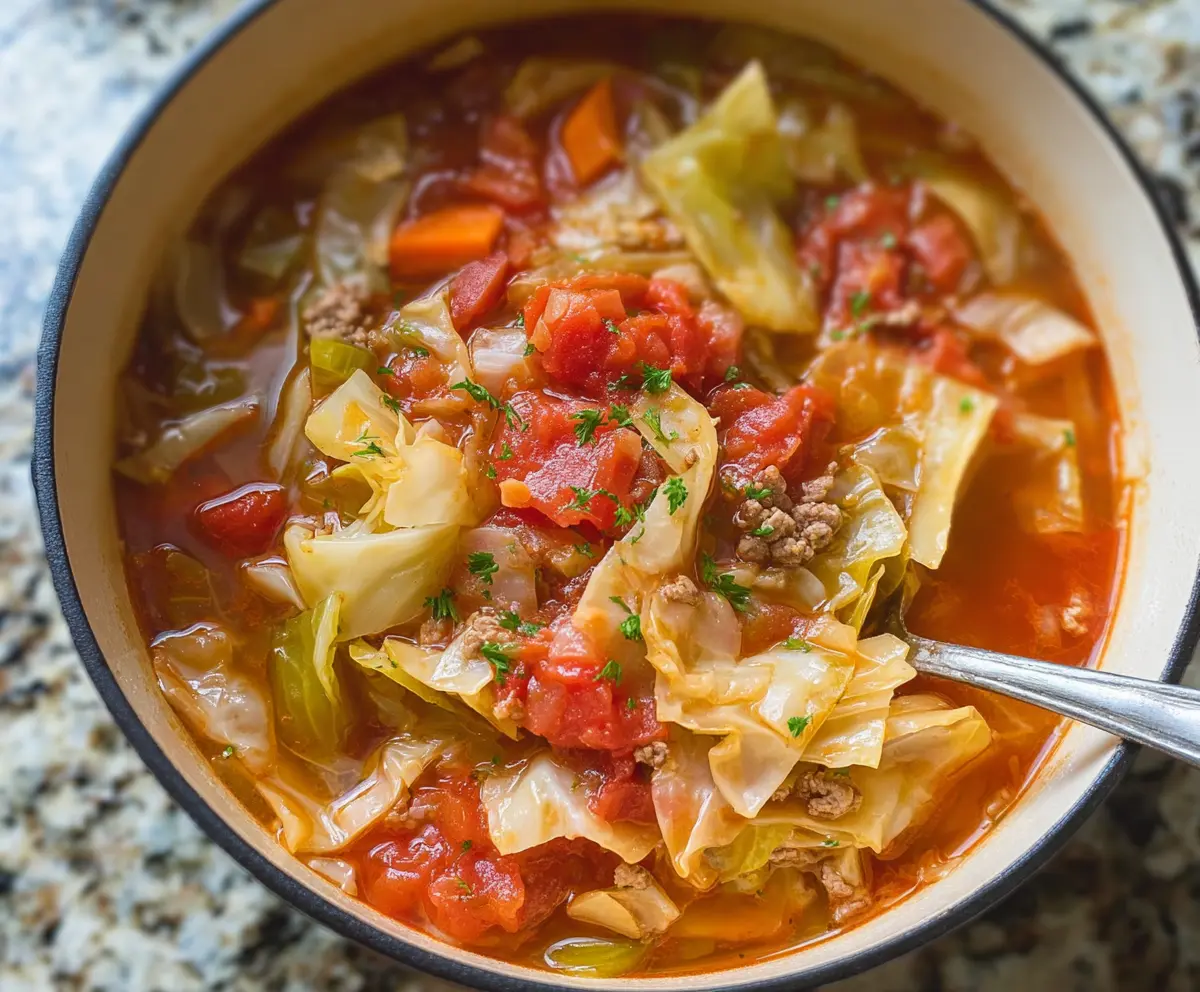
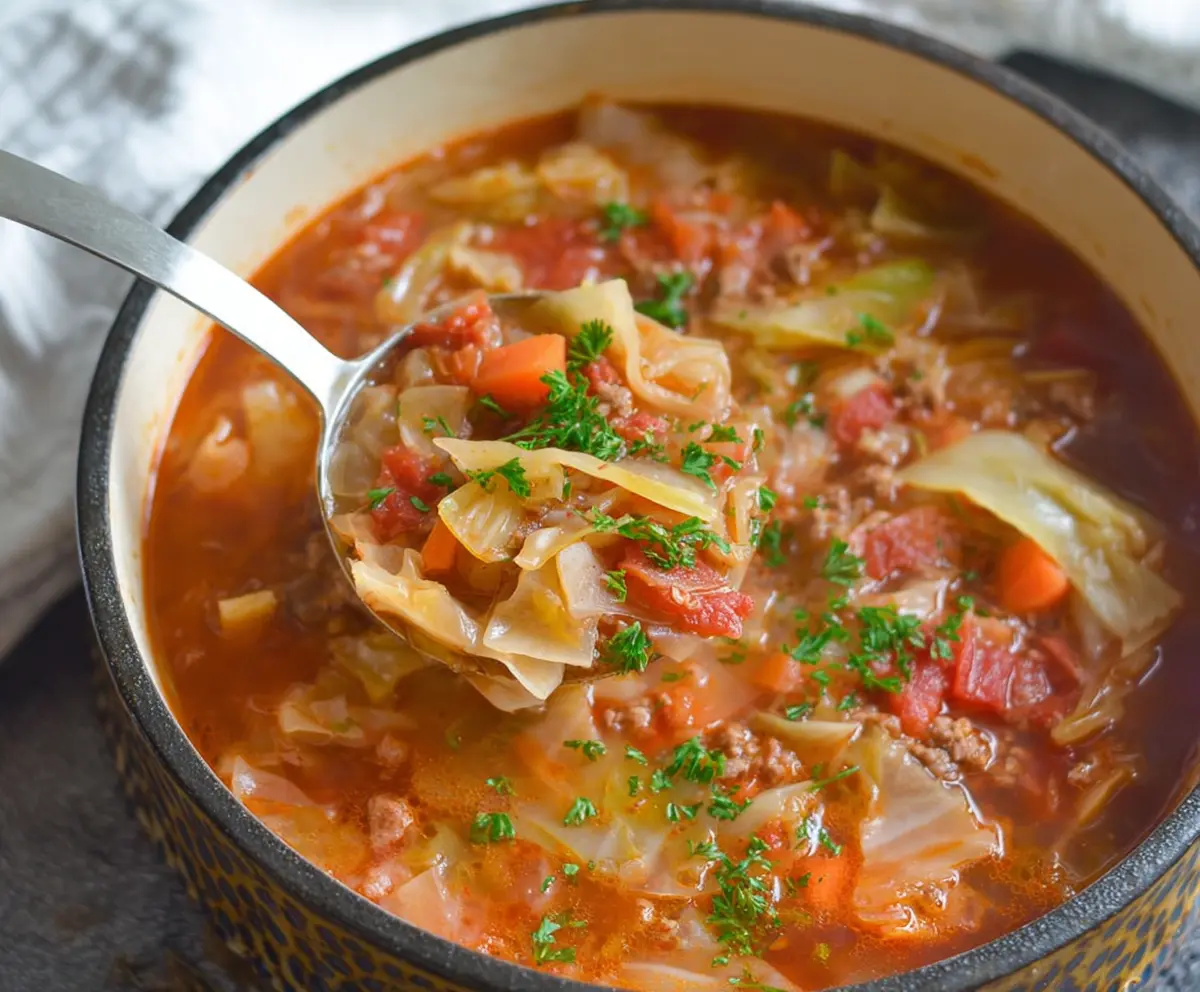
Classic Cabbage Soup is a simple, comforting bowl that’s full of tender cabbage, carrots, tomatoes, and a touch of herbs. It’s the kind of soup that feels light and fresh but also really satisfying. The chunky veggies give it a nice texture, and the broth is gentle and warming without being too heavy.
I love making this soup when I want something healthy and straightforward—it’s easy to throw together and always hits the spot. Sometimes I add a little extra garlic or a sprinkle of pepper to give it a bit more punch. It’s one of those recipes where you can easily tweak it to match what you’re in the mood for or what’s in your pantry.
My favorite way to enjoy Classic Cabbage Soup is with a slice of crusty bread on the side, perfect for dipping. It’s also a great lunch to pack for work because it reheats so well. This soup reminds me of cozy family dinners where everything feels just right, simple and delicious in its own way.
Key Ingredients & Substitutions
Cabbage: The star of this soup! Green cabbage works well for a mild taste, but try savoy cabbage for a softer texture or Napa cabbage for a lighter flavor. If you don’t have fresh cabbage, frozen chopped cabbage can work in a pinch.
Ground Beef: This adds richness but is optional. For a vegetarian version, skip the meat or swap it for cooked lentils or mushrooms to keep a hearty feel.
Diced Tomatoes: Canned tomatoes add delicious acidity and body. If fresh tomatoes are in season, chop a few up and use them instead for a fresher taste.
Broth: Beef broth gives deep flavor, but vegetable broth keeps it lighter. Chicken broth is also fine if you prefer.
Herbs & Spices: Oregano and basil bring classic flavors. Feel free to add bay leaves during simmering or use fresh herbs at the end for a brighter taste.
How Do You Cook the Vegetables So They Stay Tender but Not Mushy?
Cooking the veggies just right is key to a great soup. Here’s my simple approach:
- Start by sautéing onions, carrots, and celery until soft but not browned. This builds flavor gently.
- Add garlic and cook just until fragrant, about 1 minute, to avoid bitterness.
- Add ground beef next, cooking until browned and crumbly. Removing excess fat here keeps the soup from oily.
- Once you add the cabbage and liquids, simmer gently uncovered. This lets veggies cook through but helps some broth evaporate, concentrating flavors.
- Check veggies after 30 minutes. They should be soft but still hold their shape. If too firm, simmer a bit longer; if too soft, reduce cooking time next time.
This slow, gentle simmer helps bring out vegetable sweetness without turning them mushy.
Equipment You’ll Need
- Large heavy-bottomed pot or Dutch oven – perfect for even heating and cooking all the soup ingredients together.
- Wooden spoon – great for stirring without scratching your pot.
- Chef’s knife – sharp and sturdy, makes chopping cabbage and veggies easier and safer.
- Cutting board – a stable surface to prep your vegetables efficiently.
- Ladle – handy for serving the soup neatly into bowls.
Flavor Variations & Add-Ins
- Swap ground beef for ground turkey or chicken for a lighter protein option.
- Add diced potatoes or white beans to make the soup heartier and more filling.
- Stir in a splash of apple cider vinegar or lemon juice at the end for a touch of brightness.
- Include a pinch of crushed red pepper flakes if you like a little spice and warmth.
Classic Cabbage Soup
Ingredients You’ll Need:
Soup Ingredients:
- 1 medium head of cabbage, chopped
- 1 lb ground beef (optional for added flavor)
- 1 large onion, diced
- 3 carrots, peeled and chopped
- 2 celery stalks, chopped
- 4 garlic cloves, minced
- 1 (14.5 oz) can diced tomatoes (with juice)
- 6 cups beef or vegetable broth
- 1 tbsp tomato paste
- 2 tsp dried oregano
- 1 tsp dried basil
- ½ tsp paprika (optional)
- Salt and black pepper to taste
- 2 tbsp olive oil
- Fresh parsley, chopped (for garnish)
Time You’ll Need:
This recipe takes about 15 minutes to prepare and cook the sautéing steps, then 30-40 minutes to simmer the soup so the cabbage and vegetables become tender and flavors meld together. So, plan for about 50-60 minutes total from start to finish.
Step-by-Step Instructions:
1. Sauté the Vegetables:
Heat the olive oil in a large pot over medium heat. Add the diced onion, chopped carrots, and celery. Cook them, stirring occasionally, for about 5 minutes until they soften.
2. Add the Garlic and Ground Beef:
Stir in the minced garlic and cook for another minute until you smell the aroma. If you choose to use ground beef, add it now. Cook the beef, breaking it apart with a spoon, until it is browned and no longer pink. Drain off any extra fat if needed.
3. Add Tomato Paste and Soup Base:
Mix in the tomato paste and cook for 1 to 2 minutes to deepen the flavor. Then add the chopped cabbage, canned diced tomatoes (including the juice), broth, oregano, basil, paprika (if using), salt, and pepper. Stir everything together.
4. Simmer the Soup:
Turn the heat to high and bring the soup to a boil. Once boiling, reduce the heat to low and let it simmer uncovered for 30 to 40 minutes. This will soften the cabbage and carrots while blending all the flavors.
5. Final Touches and Serving:
Taste the soup and add more salt or pepper if needed. Serve the soup hot, garnished with fresh chopped parsley. This soup goes great with crusty bread or a simple salad for a complete meal.
Can I Use Frozen Cabbage for This Soup?
Yes, you can use frozen cabbage if fresh isn’t available. Just thaw it completely and drain any excess water before adding it to the soup to avoid thinning out the broth.
Can I Make This Soup Vegetarian?
Definitely! Simply omit the ground beef and use vegetable broth instead of beef broth. You can add beans or lentils for extra protein and heartiness.
How Long Does Classic Cabbage Soup Keep in the Fridge?
Store leftovers in an airtight container and refrigerate for up to 4 days. Reheat gently on the stove or microwave, stirring occasionally to heat evenly.
Can I Freeze Classic Cabbage Soup?
Yes! Cool the soup completely, then freeze in airtight containers for up to 3 months. Thaw overnight in the refrigerator before reheating on the stove or microwave.